

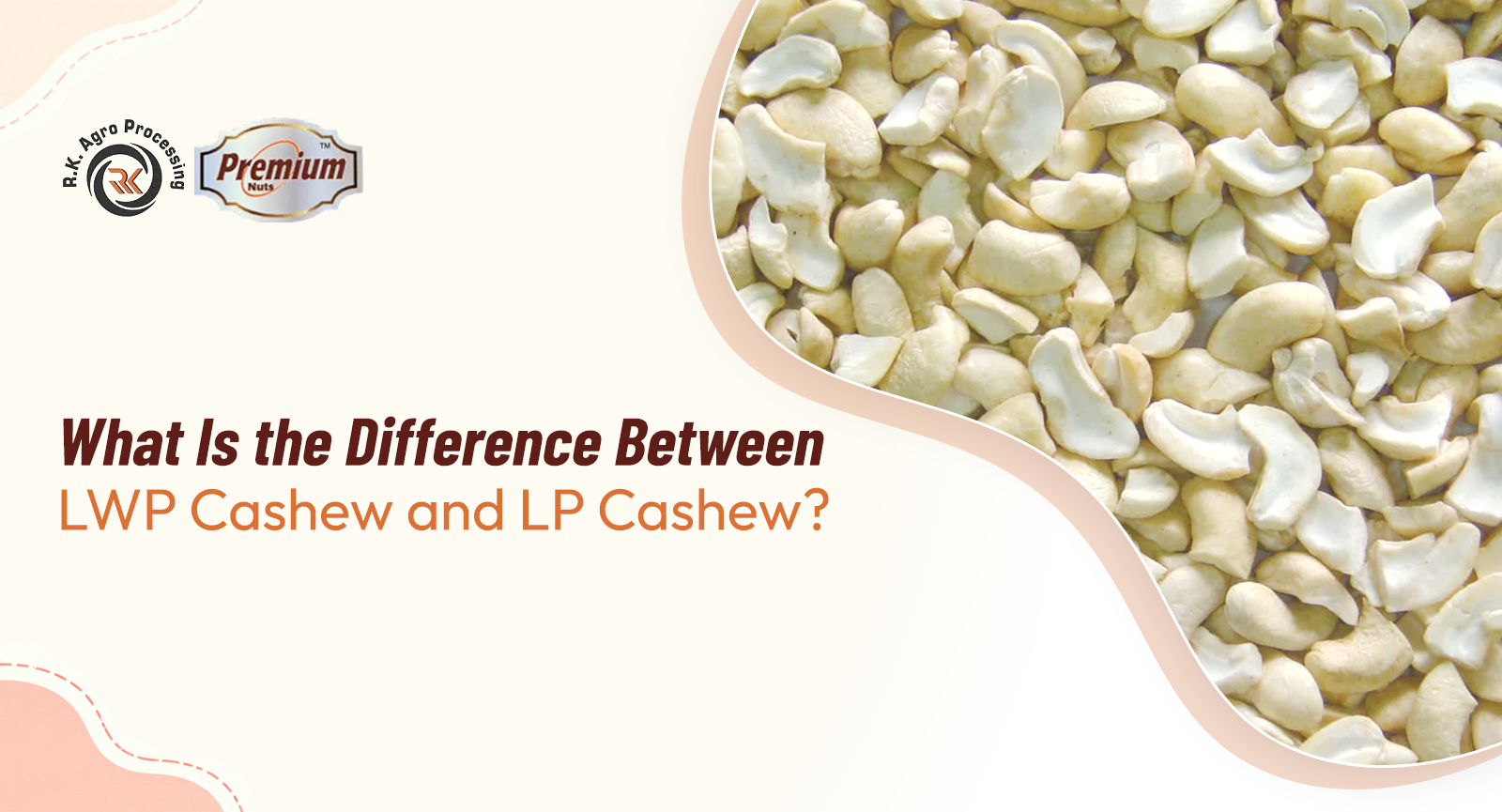
Quick Summary: This article explains what LWP cashew nut and LP cashew mean, where the two grades are similar, and where they differ. It also shows which grade suits which product, how to check quality before ordering, and which buying mistakes to avoid when working with cashew nut manufacturers.
Table of Content
- Introduction
- Difference Between LP and LWP Cashew Nuts
- Where LWP and LP Fit Among Cashew Grades
- What the Two Grade Names Mean
- LWP vs. LP Cashew Nuts: Key Differences Explained
- Choosing Between LWP Cashew Nuts or LP by Use
- How to Check Cashew Pieces Before You Order
- How to Properly Store LWP Cashew Nuts
- Buying Mistakes to Avoid
- Conclusion
Introduction
Two suppliers send you cashew price lists on the same morning. One offers LWP. The other offers LP and says it is basically the same thing. Is it? That question trips up plenty of first-time buyers, because cashew grade codes pack a lot of detail into two or three letters. The LWP cashew nut stands for Large White Pieces, while LP means Large Pieces. Both are broken kernels, both cost less than whole nuts, and both end up in bars, cookies, chocolate, and sauces. Yet color, piece size, and supplier rules can differ more than the names suggest. Pick the wrong grade, and your product may look uneven, or you may pay extra for whiteness nobody will see. This article breaks down what each grade means, where they match, and where they split. You will also learn how to pick the right one for your product, how to check quality before ordering, and what you need to judge in a cashew nut manufacturer before you make a decision to buy nuts from them.Difference Between LP and LWP Cashew Nuts
Here is the short version before we go deeper:| Point | LWP | LP |
| Full name | Large White Pieces | Large Pieces |
| Color | White, uniform | White to pale ivory or light ash |
| Common in | Indian grade lists | Vietnamese grade lists |
| Typical form | Large broken pieces | Large broken pieces |
| Best for | Granola, bars, confectionery | Bakery, chocolate, cereal, sauces |
Where LWP and LP Fit Among Cashew Grades
Cashew kernels fall into whole and broken grades, and pieces the prices in the second group:- Wholes: W180, W240, and W320 show kernels per pound, so a lower number means a bigger kernel.
- Splits and butts: Whole kernels separated into two halves, lengthwise or crosswise.
- Large pieces: LWP cashew nuts and LP, the bigger broken kernels.
- Small pieces: SWP, SP, and baby bits, used where size matters less.
- Dessert grades: DW and DP, with minor color flaws and lower prices.
What the Two Grade Names Mean
The letters are short, but each one carries a rule about color and size. The difference between the two grade names of cashews is:LWP Cashew Nut: Large White Pieces
LWP stands for Large White Pieces. In cashew grading, it covers large broken kernels that keep a white, even color. Many pieces are simply whole kernels that split into halves or larger fragments during shelling and peeling. Indian trade lists LWP cashew nuts next to SWP, or Small White Pieces, and baby bits. Food makers pick it when they want the look of a good kernel at a lower cost than whole kernels.LP Cashew: Large Pieces
LP stands for Large Pieces. Suppliers, especially in Vietnam, use it for large broken kernels in a natural white to light cream or light ash shade. Specifications can allow a slightly wider color range than LWP, though this depends on the supplier. Bakeries, chocolate makers, and cereal producers use LP because it adds a clear cashew bite at a friendly price.LWP vs. LP Cashew Nuts: Key Differences Explained
Most gaps between the two show up in four places:- Naming: LWP is common in Indian grading, while LP is common in Vietnamese lists, so similar products can carry either label.
- Color: LWP stresses whiteness, while LP allows a range from white to light ash.
- Uniformity: Piece size can vary inside both grades, so check each supplier’s size range.
- Specification: Limits for moisture, broken kernels, and defects come from the supplier, not from the grade name.
Choosing Between LWP Cashew Nuts or LP by Use
Match the grade to what the customer sees and tastes:- Granola and protein bars: LWP gives clean, light pieces that look good in a pack.
- Bakery and confectionery: LP works well in cookies, fillings, and chocolate, where pieces get mixed in.
- Toppings and snack mixes: Choose LWP when pieces stay visible, and LP when they blend in.
- Sauces, pastes, and butters: Smaller grades like SWP or baby bits often cost less and do the work.
How to Check Cashew Pieces Before You Order
Ask for a written specification and a sample, then check these points:- Moisture: Many specifications cap it at 5 percent, which helps protect against mold and rancidity.
- Color: Look for an even white or pale ivory shade without dark spots.
- Size range: Ask for the piece size of the LWP cashew nuts in writing, since “large” can mean different things to different suppliers.
- Broken fines: Too much dust means you pay for powder, not pieces.
- Smell and taste: Fresh kernels smell sweet and nutty, never stale or oily.
- Packing: Sealed cartons protect pieces during shipping and storage.
How to Properly Store LWP Cashew Nuts
Broken kernels expose more surface to air, so they need good storage:- Keep cartons in a cool, dry room away from direct sun.
- Reseal opened packs tightly to keep out air and moisture.
- Store them away from strong smells, since nuts absorb odors.
- Use older stock first.
Buying Mistakes to Avoid
Most sourcing problems come from assumptions:- Assuming LWP and LP are identical across suppliers.
- Comparing prices without comparing color and size factors.
- Skipping a sample before a bulk order.
- Ignoring storage needs, since cashews turn rancid in heat and humidity.
Conclusion
LWP cashew nuts and LP cashew nuts may look like alphabet soup on a price list, but they come down to color, size, and consistency. Read the specification, taste the sample, and match the grade to where the pieces will appear in your product. A little research at this stage prevents costly surprises later in production. If you need help comparing cashew grades, RK Agro Processing is ready to guide you toward the right cashew pieces for your recipe, your look, and your budget.FAQs
LWP cashew stands for Large White Pieces, which are large broken cashew kernels with an even white color.
LP in cashews stands for Large Pieces, a grade of large broken kernels common in Vietnamese trade, in white to light ash shades.
LWP and LP cashews are very close, but not identical. Color limits and size ranges vary by supplier, so compare written specifications.
Yes, LWP cashews are cheaper than whole cashews. Broken grades usually cost less than whole cashews because food makers do not need perfect shape.
Many exporters pack two 25 lb sealed packs in a 50 lb carton, and a full container holds about 700 to 750 cartons.
LWP cashews are available both raw and roasted, but buyers usually order raw kernels and roast or season them in their own process.

